

14. May 2026 18:00 Uhr (MEZ)
Online-Lecture Mark Driessen (NL) – A Green Desert in Southern Jordan: Antique Solutions to Current Issues: Archaeological Research of Ancient Water Harvesting and Agricultural Schemes
Online lecture
Cordial Invitation
to the Online Lecture (ZOOM) on 14.05.2026, 6:00 pm (CET)
Dr. Mark Driessen, Leiden, NL
A Green Desert in Southern Jordan: Antique Solutions to Current Issues: Archaeological Research of Ancient Water Harvesting and Agricultural Schemes
Mark Driessen graduated at Wageningen University (tropical forestry and agriculture) and worked for many years in Africa and South America. After returning to The Netherlands he started working as a field archaeologist and studied Provincial Roman Archaeology at the University of Amsterdam and obtained his PhD on the topography, settlement continuity and monumentality of Roman Nijmegen at the same university. He excavated and worked on the Roman harbour of Voorburg-Arentsburg (Forum Hadriani). Since 2011 he is Assistant Professor in Provincial Roman Archaeology at Leiden University and director of the Udhruh Archaeological Project (Jordan).
Mark Driessen about his lecture:
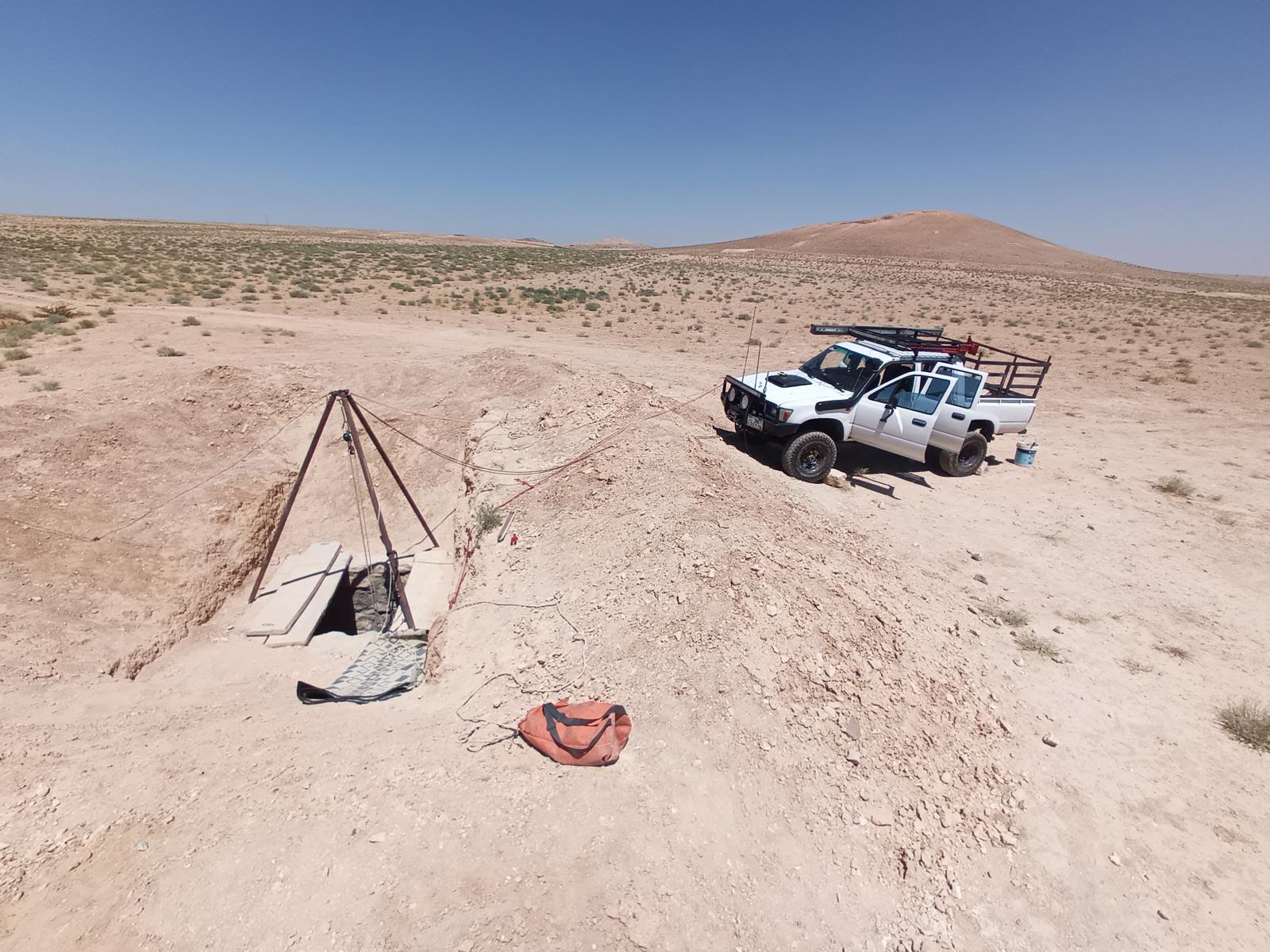
Access to water is one of the greatest global challenges of the 21st century. Scholars from different fields of research around the world are dealing with the ever-growing demand for, and with the severe supply constraints of water. Ancient societies dealt with similar problems. An intriguing transformation in the organisation of water resources, agricultural systems and settlement patterns has been observed in the region around Udhruh (southern Jordan), turning the desert into green oases in antiquity. After ten years of archaeological field work, we can conclude that this project houses one of the most complete and best-preserved field ‘laboratories’ to study the long-term development of innovative water management, erosion control and agricultural systems throughout the first millennium (1st century BCE – 10th century CE). From a research perspective we aim to reconstruct the antique agro-hydrological techniques which were employed to cultivate and preserve this arid landscape and the societal conditions that made these possible. Only by practicing an interdisciplinary approach can this be accomplished whereby archaeological research is integrated with historical, geophysical, water resources, and chemical soil studies. From a societal point of view, out international and interdisciplinary research team will examine, in cooperation with the local communities, what the key to this water management and agricultural success was in ancient times, and how this knowledge can contribute to possible sustainable agricultural, erosion control and water management solutions for future use.
The access data for the online meeting (ZOOM) are as follows:
https://us02web.zoom.us/j/87933930044?pwd=dlk4REZ4S0NnL3k2RGN2TVdtZTd3Zz09
Meeting-ID: 879 3393 0044
Kenncode: 631844
14. May 2026 18:00 o'clock (CET)
Online-Lecture Mark Driessen (NL) – A Green Desert in Southern Jordan: Antique Solutions to Current Issues: Archaeological Research of Ancient Water Harvesting and Agricultural Schemes
Online lecture
Cordial Invitation
to the Online Lecture (ZOOM) on 14.05.2026, 6:00 pm (CET)
Dr. Mark Driessen, Leiden, NL
A Green Desert in Southern Jordan: Antique Solutions to Current Issues: Archaeological Research of Ancient Water Harvesting and Agricultural Schemes
Mark Driessen graduated at Wageningen University (tropical forestry and agriculture) and worked for many years in Africa and South America. After returning to The Netherlands he started working as a field archaeologist and studied Provincial Roman Archaeology at the University of Amsterdam and obtained his PhD on the topography, settlement continuity and monumentality of Roman Nijmegen at the same university. He excavated and worked on the Roman harbour of Voorburg-Arentsburg (Forum Hadriani). Since 2011 he is Assistant Professor in Provincial Roman Archaeology at Leiden University and director of the Udhruh Archaeological Project (Jordan).
Mark Driessen about his lecture:
Access to water is one of the greatest global challenges of the 21st century. Scholars from different fields of research around the world are dealing with the ever-growing demand for, and with the severe supply constraints of water. Ancient societies dealt with similar problems. An intriguing transformation in the organisation of water resources, agricultural systems and settlement patterns has been observed in the region around Udhruh (southern Jordan), turning the desert into green oases in antiquity. After ten years of archaeological field work, we can conclude that this project houses one of the most complete and best-preserved field ‘laboratories’ to study the long-term development of innovative water management, erosion control and agricultural systems throughout the first millennium (1st century BCE – 10th century CE). From a research perspective we aim to reconstruct the antique agro-hydrological techniques which were employed to cultivate and preserve this arid landscape and the societal conditions that made these possible. Only by practicing an interdisciplinary approach can this be accomplished whereby archaeological research is integrated with historical, geophysical, water resources, and chemical soil studies. From a societal point of view, out international and interdisciplinary research team will examine, in cooperation with the local communities, what the key to this water management and agricultural success was in ancient times, and how this knowledge can contribute to possible sustainable agricultural, erosion control and water management solutions for future use.
The access data for the online meeting (ZOOM) are as follows:
https://us02web.zoom.us/j/87933930044?pwd=dlk4REZ4S0NnL3k2RGN2TVdtZTd3Zz09
Meeting-ID: 879 3393 0044
Kenncode: 631844